The Annual Survey of Infocomm Usage in Households and by Individuals for 2004 represents the ninth report in an annual series begun in 1990 by IDA. The objectives of the survey were to:
-
Gauge the level of ownership of Infocomm appliances and subscription to Infocomm services in Singapore households and among individuals
-
Assess the sophistication and extent of Infocomm usage in the households and among the individuals
-
Identify barriers and motivations towards the adoption and diffusion of Infocomm usage in the households and among the individuals
The survey comprised 2 sets of questionnaires:
-
The household questionnaire which was answered by a family member aged 15 years and above who is in the position to answer the questions for the whole family. The household questionnaire was directed at all households, regardless of nationality.
-
The individual questionnaire which was answered by one randomly selected family members aged 15 years and above. The individual questionnaire was directed only at the resident population.
Data collection was done via face-to-face interviews for all the household and individual questionnaires. A completed return of 2,000 households and 2,000 individuals were achieved.
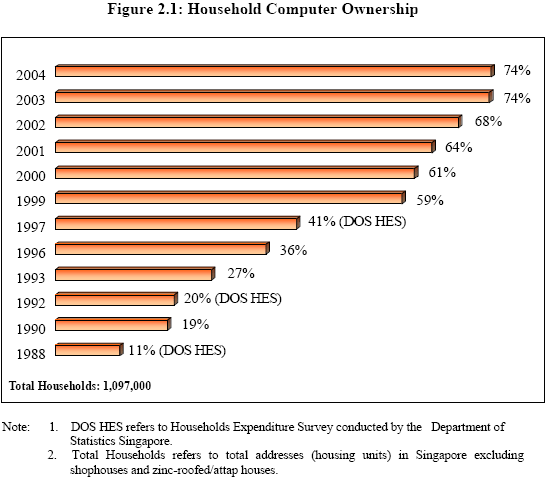
2.1 Does Your Household Have Computer(Desktop/Laptop)?
In 2004, the number of households in Singapore owning computers (Desktop/Laptop) increased by over 13,000 over the past one year. However, the proportion of households owning computers remained unchanged at 74% due to the increased number of households in the base population over the same period.
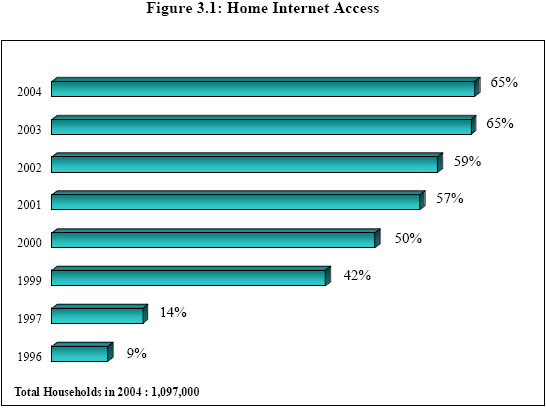
 3.1 Does Your Household Have Internet Connection?
Similarly, the number of households with Internet access increased by 16,000 from 2003 to 2004, with the household Internet penetration remaining at 65% due to the increased number of households in the base population.
 4.1 Computer Users
The proportion of computer users to total population in 2004 remained the same as 2003, primarily due to a corresponding increase in the base population.
|
|
2003
|
2004
|
|
Computer users
|
2,620,717
|
2,651,948
|
|
Proportion of total population using computers
|
63%
|
63%
|
Total population (2003:4,185,000 and 2004:4,240,300)
4.2 Internet Users
Slightly more than half (57%) of the total population in Singapore used Internet (including Broadband) in 2004, up by 6 percentage points over 2003.
|
|
2003
|
2004
|
|
Internet users
|
2,135,034
|
2,421,782
|
|
Proportion of total population using Internet
|
51%
|
57%
|
Total population (2003:4,185,000 and 2004:4,240,300)
5.1 Usage
E-mail, Online Information Retrieval/Search and Download Application Software were the top 3 applications used by Internet users aged 15 and above in 2004.
Usage of more sophisticated applications beyond email have picked up - Online Information Retrieval/Search from 64% to 82%, Download Application Software from 43% to 62% and Online Government Related Transactions from 42% to 56%.
Table 5.1: Usage of Internet Applications and Services (as a proportion of Internet users aged 15 years and above)
|
E-Communications:
|
2003
|
2004
|
|
E-Mail
|
91.9%
|
95.2%
|
|
Chat/Instant Messaging
|
47.5%
|
53.9%
|
|
Internet SMS
|
38.5%
|
37.3%
|
|
Discussion Groups
|
23.0%
|
28.5%
|
|
Video Conferencing
|
11.3%
|
18.8%
|
|
Internet Telephone Telephony
|
12.8%
|
17.0%
|
|
E-Transactions:
|
|
Online Government Related Transactions
|
42.2%
|
55.5%
|
|
Online Banking
|
32.6%
|
39.5%
|
|
Online Shopping
|
20.0%
|
29.9%
|
|
Online Investments/Securities
|
8.4%
|
12.8%
|
|
Online Insurance Services
|
5.0%
|
9.6%
|
|
Non-monetary e-Transactions:
|
|
Online Information Retrieval/Search
|
64.1%
|
82.3%
|
|
Download Application Software
|
43.1%
|
61.5%
|
|
Upload & Download Documents From Office Server
|
36.8%
|
52.9%
|
|
Online Job Search/Job Application
|
31.2%
|
43.7%
|
|
Online Library services
|
29.9%
|
36.2%
|
|
Creating Online Personal Home Page
|
15.5%
|
21.4%
|
|
E-Entertainment:
|
|
Download and/or Upload Digital photos
|
34.1%
|
48.2%
|
|
Audio Streaming/Download and/or Upload Music
|
37.1%
|
46.1%
|
|
Download/Play online games
|
48.4%
|
43.0%
|
|
Video Streaming/Download and/or Upload Video
|
27.5%
|
32.4%
|
|
Online Contest/Competitions
|
20.9%
|
24.1%
|
|
E-Learning:
|
|
E-Learning or Online Education
|
29.8%
|
32.0%
|
|
Children Educational Content (e.g. Online Assessment)
|
17.0%
|
21.1%
|
|
Total Internet/Broadband Users Aged 15 years old & above
|
1,463,370
|
1,723,300
|
6.1 Do You Buy Online? How Much?
Almost one-third of the Internet users aged 15 years and above has ever used online shopping as at 2004. This was the highest growth since 2000.
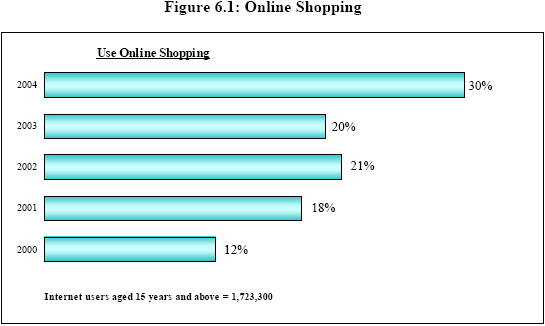
The average number of online purchases increased from 2.3 in 2003 to 2.8 in 2004. Internet users also spent more through online purchases in 2004. The average online dollar-spend by online shoppers has increased from $336 in 2003 to $539 in 2004. Ticketing (39%), Books/Magazines (31%) and Travel items (30%) were the top 3 products/services bought online in 2004.
Table 6.1: Average Number of Online Purchases and Dollars Spent
|
Average number of Online Purchases in last 6 months
|
2.3
|
2.8
|
|
Average Dollars spent online in the last 6 months
|
$336
|
$539
|
7.1 Not Buying Online: Why?
The top 5 main reasons for not buying online remained identical for both years, with increasing concern of "Internet security issue".
Table 7.1: Top Five Reasons for Not Buying Online
|
Prefer going to the shops for variety and to check prices
|
39.8%
|
|
Internet security issue
|
24.7%
|
|
No necessity/Nothing to buy
|
16.5%
|
|
No credit card
|
8.2%
|
|
Not enough information given to make a purchase decision
|
3.7%
|
|
Prefer going to the shops for variety and to check prices
|
38.1%
|
|
Internet security issue
|
12.9 %
|
|
No necessity/Nothing to buy
|
25.9 %
|
|
No credit card
|
8.2%
|
Don't know how to buy online
|
6.2 %
|