

Talent
Building capabilities in data sciences
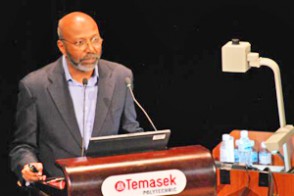
Singapore has to think big when it comes to big data. This was one of the key messages that came across in a presentation by Mr Prabir Sen, Chief Data Scientist, Data Sciences Group, Infocomm Development Authority of Singapore, at a recent seminar on big data organised by the Singapore Computer Society.
Speaking on the topic “Building capabilities in data sciences – a study towards a Smart Nation”, Mr Sen said Singapore must seize the opportunities presented by data analytics to build and create products and solutions that can be consumed by the world.
One area of focus would be the automation of analytics-driven products, moving from structured to unstructured and probabilistic data, from slow learning to unsupervised fast learning, and from analytics to products that can do forecasting, simulation, recommendation and predictive personalisation. Such products could be aimed at addressing the needs of specific sectors, for example, traffic flow control, smart energy networks, and risk and fraud detection.
There are also solutions that can create an impact on the man in the street. In the same way that “Walmart knows mothers and Phillip Morris knows men better than they know themselves”, data analytics presents a systematic way to understand behaviour and nudge it for positive impact. “It is fascinating to look at how people make decisions and how small changes in the way information is presented can affect those decisions for the better,” said Mr Sen.
To achieve significant strides in this area, Singapore needs to work with the whole data ecosystem and not just focus on small-scale collaborations. “We have to include data storage companies, services companies, cloud companies, database companies… bring them together to create a massive impact through data sciences.”
It has to build an information infrastructure across public agencies to enable cross-sector analysis which will help the government better understand and improve citizens’ lives. Such analysis could uncover insights such as the impact of energy on transportation, the impact of manpower on health, or the impact of the environment on health, and so on.
Another area that Singapore is looking at is talent. “We have to address the local scarce talent flow conditions,” said Mr Sen.
One way to do this is to bring back Singaporean data scientists from around the world and leverage their expertise. “We need to encourage Singapore companies, Singapore tech talent, to come and build tech here.”
Efforts are also underway to develop a larger pool of local expertise in predictive analytics, and not just data analysis. For these to have an impact, the scope has to be large. “We are looking at whether there is a way we can train 10,000 individuals – not only students but also industry practitioners where we can allow them to learn and understand data-driven decision-making processes,” said Mr Sen.
The topic of talent development was also discussed by Mr Greg Whelan, Director, Data Science, Asia Pacific and Japan, Pivotal, who presented on the topic “Developing data science talent and managing capability gaps”. Describing the unique skills profile of a data scientist, he said it is a multifaceted role which involves a combination of skills. This includes “a lot of analytics, statistics, and math”. It also calls for someone who is application-focused, and ready to deal with big data technologies to answer questions, he added.
Another speaker at the seminar was Mr Lau Shih Hor, Chief Executive Officer of Elixir Technology, who gave a presentation on his company’s journey from business intelligence to business analytics.
Held in conjunction with Temasek Polytechnic’s IT Show 2014, the seminar also saw the launch of the SCS Business Analytics Chapter. SCS Vice President Mr Tan Teng Cheong said this was significant because of the emphasis on growing the business analytics community in Singapore. The Business Analytics Chapter will accelerate skills development, help grow the pool of business analytics professionals and encourage sharing in this area, he said.