

Special Reports
Optimising spectrum usage
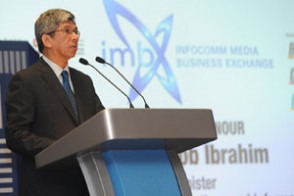
Singapore, Brunei, Indonesia and Malaysia have agreed to harmonise the use of the 700 MHz band – a move which will allow the countries to address the growing demand for mobile broadband services, improve regional mobile roaming and pave the way for more competitive offerings in this space. This was announced by Dr Yaacob Ibrahim, Singapore’s Minister for Communications and Information, at the opening ceremony of the Infocomm Media Business Exchange (imbX) on 18 June 2013.
The Authority for Info-communications Technology Industry of Brunei Darussalam (AITI), the Directorate General Sumber Daya dan Perangkat Pos dan Informatika of Indonesia (DG SDPPI), the Malaysian Communications and Multimedia Commission (MCMC) and the Infocomm Development Authority of Singapore (IDA), have jointly committed to align with the Asia Pacific Telecommunity (APT) 700 MHz band plan, which seeks to optimise the use of broadcast spectrum that will be freed up after ASEAN countries complete their targeted switchover from analogue to digital broadcasting by 2020.
The freed 700 MHz spectrum would be allocated for mobile broadband services such as 4G services, supporting the growing number of mobile subscribers in the region and the upsurge in bandwidth-hungry applications. In addition, the spectrum propagation characteristics enable wider coverage and improved indoor services. The APT 700 MHz band plan specifies the radio frequency channelling within the frequency range for wireless broadband services. The APT 700 MHz band plan, in particular, is a promising spectrum arrangement for international adoption as it enables more spectrum to be used for wireless broadband services.
Hj Yahkup Hj Menudin, Chief Executive of AITI, said the use of the 700 MHz band will help Brunei Darussalam address the issue of mobile broadband coverage in underserved areas of the country, and also enable greater interoperability and facilitate international roaming between networks. “Cross border co-ordination can be further enhanced as we adopt the same band plan. In addition, there will be economies of scale for the cost of mobile broadband equipment and devices,” he said.
Indonesia also voiced its support for the APT 700 MHz band plan. Dr Muhammad Budi Setiawan, Director General of DG SDPPI, said it was in line with the country’s Master Plan for Digital Television, under which the 694-806 MHz band has been allocated for digital services.
Dato’ Mohamed Sharil Tarmizi, Chairman of MCMC, said the commitment signified an important step in regional harmonisation. “A regionally harmonised 700 MHz band will be advantageous in many aspects, promoting greater cohesion technologically and socially, spurring growth and development in the industry and greater business community.”
Describing the agreement as an important milestone for the four regulatory bodies, Mr Leong Keng Thai, Director-General (Telecoms & Post), IDA, expressed the hope that the collaboration could be further extended to other countries in this region, to further improve regional mobile roaming and allow the countries to meet growing demand for mobile broadband.
IDA launches public consultation on TV White Space technology
In a separate initiative on spectrum optimisation, IDA has announced the start of a public consultation on the use of TV White Space (TVWS) technology, which taps on under-utilised spectrum within the TV broadcast channels to deliver wireless services.
Radio frequencies in the TVWS spectrum bands offer good propagation characteristics that allow wide area outdoor wireless coverage, better building penetration, and potential for high-speed connectivity. The range of potential applications that could ride on TVWS technology include the provision of wireless broadband Internet access services, machine-to-machine connectivity, smart metering and outdoor environment or security monitoring networks.
The launch of the public consultation on the proposed TVWS regulatory framework signals IDA’s commitment to facilitate the deployment of TVWS technology in Singapore. In 2010, IDA introduced technical and commercial trial frameworks for TVWS to facilitate the pilot of innovative TVWS applications and to validate the feasibility of using the technology in Singapore. These trials and pilot projects contributed to the development of the proposed regulatory framework which IDA has now issued for consultation.
The public consultation discusses issues such as the licensing mechanism for TVWS devices, TVWS spectrum bands and access mechanism, device co-existence criteria and parameters, and management of geo-location databases. It will enable IDA to understand the industry’s needs and refine the regulatory framework to ensure that it is in line with international best practices and contextualised to the needs of Singapore’s market and business environment.
- IDA invites interested parties to submit their comments on the proposed TVWS regulatory framework. For more information, please visit the public consultation website .