

eGov & Sectors
Reducing waiting time at SGH pharmacy

An intelligent outpatient pharmacy system has enabled the Singapore General Hospital (SGH) to halve the time needed to fill prescriptions at its pharmacy, so that over 80 per cent of patients can get their medicines within 30 minutes.
Implemented by SGH and IHiS, the Health Ministry’s IT arm, the Automated RFID Prescription Drug Delivery System (APDS) won the CIO Asia award in March this year for shortening patients’ waiting time and increase staff productivity.
The system applies advanced manufacturing supply chain, RFID and LED technologies to the traditional clinical setting, to transport, auto-assemble and channel packed items to the front dispensing counters. It consists of a pharmacy dispensing workflow system and software that optimises processes, a drug dispensing system that controls machines that pick, pack and label drugs, and a LED light guiding system for manual drug picking.
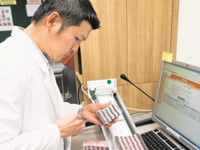
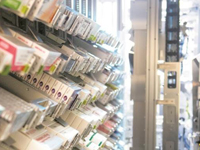
The system allows pharmacists to review tagged prescriptions before dropping them into an RFID-tagged basket on a conveyor to trigger the packing process. Drug dispensing robots will then automatically pick and drop medicines into labelled plastic bags.
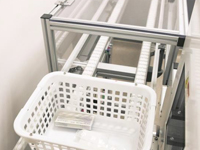
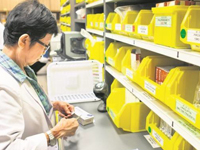
Concurrently, for medicines that require manual picking, pharmacy staff will scan the drugs’ barcodes and LED lights above the right container will blink to guide staff to pick the correct drug. After which, packed medicines are placed into RFID-tagged baskets on a 110-metre conveyor where RFID readers along the conveyor provide real-time tracking of the drugs. Once all baskets with medicines for the same prescription are detected on the conveyor, they are auto-assembled and channelled to the next available dispensing counter, based on the queue order.
APDS has helped reduced the manpower needed to pick and pack drugs by 11 persons. The staff are instead re-deployed to run more front dispensing counters to serve 50 per cent more patients. More importantly, the system has improved patient safety by enabling pharmacists to review all prescriptions and by reducing drug-packing errors.
IHiS Chief Executive Officer Dr Chong Yoke Sin said the system is part of iHIS’ roadmap to equip all public healthcare institutions with innovative systems to improve patient waiting times and care quality, and multiply productivity and capacity.
The five local companies that created the system include Getech who developed the automated drug dispensing system, NCS who created the pharmacy workflow dispensing and light guided drug pick system, PSB Technologies who built the intelligent conveyor system, Innotech Resources who integrated RFID technology with the conveyor, and EurekaPlus who programmed the controlling software. The project was funded by SGH, Ministry of Health and SPRING Singapore.
How the Automated RFID Prescription Drug Delivery System works
| Step 1 : Prescriptions are barcoded and dropped into RFID-tagged baskets, triggering the packing process. |

|
| Step 2 : The baskets travel on a conveyor where RFID readers provide real-time tracking of the drugs. |
|
| Step 3 : Medicines are packed in cartridges which are slotted into the picking robots. |
|
| Step 4 : The robot picks the right drug and drops it into a basket. |
|
| Step 5 : For drugs that need manual picking, when the drug’s barcode is scanned, the LED on the drug bin lights up, guiding staff to the right drug. |
|
| Step 6 : When all baskets with medicines for the same prescription are on the conveyor, they are automatically moved to the next available dispensing counter. A pharmacist then reviews and dispenses the drugs to a patient. |