

eGov & Sectors
Rapide reduces waiting time at cancer centre
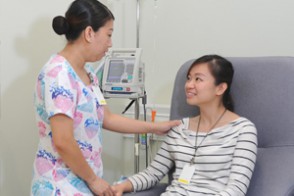
A new radio frequency identification (RFID) system has been introduced at the National Cancer Centre Singapore (NCCS) to enable it to treat more chemotherapy patients and reduce waiting time.
With the Real-time Ambulatory Patient Information Deployment Enabler (Rapide) system, RFID tags are given out to patients and nurses at the chemotherapy unit. The RFID readers on the walls and ceilings will detect signals from the tags and, together with sensor mats on the recliners or beds, transmit data to the system to pinpoint the patients’ and nurses’ locations.
The Rapide system processes the data to give nurses and front counter staff a real-time view, on their computer screens, of the occupancy of the chemotherapy recliners and beds.
Once the treatment is over, the patient drops the tag into a box, which then signals to the system that the bed or recliner is ready for the next patient. Nurses and front counter staff can then allocate the available chemotherapy resource to the next patient.
The Rapide system also allows the centre’s pharmacy staff to electronically update the status of a patient’s drugs, so staff can see on their screens if a patient’s drugs are ready for him to begin his chemotherapy treatment.
According to NCCS Deputy Director of Nursing Ms Chan Mei Mei, the RFID solution has enabled the centre to reduce patient waiting time significantly. “Today, we can treat 20 per cent more patients and about 80 per cent of our patients wait no more than an hour for their treatment at the centre,” she said .
“Our nurses no longer need to manually search for empty recliners, or make calls to check if drugs are ready. Instead, they save about 69 hours a month or 825 hours a year, which they now use to treat more patients,” Ms Chan added.
Rapide was deployed by the Health Ministry’s IT arm IHiS together with NCCS, and sponsored by the A*STAR Singapore Institute of Manufacturing Technology.
The system is linked to the NCCS’ patient administration and queue management systems to provide swift and seamless appointment scheduling and registration.
With greater automation, Rapide saves the centre’s reception staff up to 744 hours a year, as they no longer have to spend time faxing patient appointment information to clinic staff.
Furthermore, instead of patients waiting at the centre for their turn, the system now sends them an SMS 30 minutes before their scheduled appointment, allowing them to use their time more productively.
If patients do not show up due to hospitalisation or because they are unwell, or they are late due to bottlenecks at the oncology clinics, Rapide allows the centre’s staff to quickly intervene and re-allocate resources.
IHiS Chief Executive Officer Dr Chong Yoke Sin said the Rapide system helps staff to improve care delivery by generating statistics on resource utilisation as well as patient waiting and treatment times.
This is in line with IHiS’s goal to help specialty centres and clinics leverage technology to expand their capacity and treat more outpatients as the number of chronic disease patients rise with Singapore’s fast ageing population, she said.
The Rapide system won two bronze awards at the Hongkong RFID Awards in November for “Best RFID Implementation” and “Most Innovative Use of RFID”.