

eGov & Sectors
Pushing the boundaries
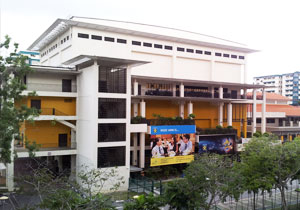
To encourage critical inquiry among learners, Ngee Ann Secondary School is looking to make use of web-based artificial intelligence chat bots to provide an evolving narrative of specific subjects. |
Smart bots that can converse with students, and systems that can automatically assess and guide students in their learning – these are some of the innovations in store for students of Ngee Ann Secondary School and the School of Science and Technology as they embark on their FutureSchools@Singapore journey.
FutureSchools@Singapore is a programme under which new information and communications technology (ICT) solutions are developed to support innovative approaches to teaching and learning. One of the key strengths of the initiative is the strategic partnership with infocomm industries which has resulted in many new tools and applications that have transformed the classroom experience for both teachers and students.
Under the latest FutureSchools Call for Collaboration which was issued by the Infocomm Development Authority of Singapore (IDA) in May, two companies have been selected from 11 proposals to deploy next generation technologies to support the schools’ innovative teaching and learning programmes.
To encourage critical inquiry among learners, Ngee Ann Secondary School is looking to make use of web-based artificial intelligence chat bots, represented by key historic or scientific figures such as Einstein or Shakespeare, to provide an evolving narrative of specific subjects. The bots collate and analyse responses given by students to identify learning patterns and assess their needs. The information will be added to a database of questions and learning resources, to improve the quality of questions and increase the depth of content probing with every interaction.
The technology solution will also allow students to develop critical inquiry skills by having an active dialogue with the chat bots in a conducive environment. Teachers will be able to access information contributed by students and establish students’ learning patterns and needs. This will help them to assess each student’s critical thinking skills in order to better guide their learning progress.
“The FutureSchools innovation will help teachers to identify the learning patterns of their students and better assess their learning needs,” said Mr Adrian Lim, Principal of Ngee Ann Secondary School. “This is in line with our aim to deliver a student-centric education.”
The project has been awarded to aZaaS Pte Ltd, which will be developing the software solution for Science and English Literature subjects. The system will also be designed to be adaptable to other subjects.
At the School of Science and Technology, a Scaffolded Algorithmic Inquiry-Based Learning (SAILing) system is being developed to support inquiry-based learning. Students interacting with the system will be automatically assessed on their understanding of the subject matter based on the answers they provide. The responses provided by the student are continuously assessed by the system so that it will be able to determine if the respondent requires more coaching in a particular area. This forms the basis in which the solution provides the necessary guidance as to whether the student can proceed to the next stages of learning.
“With the SAILing FutureSchools project, teachers can customise the learning experience for their students. The system is able to provide the next level of learning based on the students’ progress, so as to better meet their learning needs,” said Mr Chua Chor Huat, Principal of the School of Science and Technology, Singapore.
The SAILing project has been awarded to TokToL Pte Ltd, which will be developing a solution for the learning of science. Like the Ngee Ann project, the system will also be designed to be adaptable to other subjects.
Mr Lim Teck Soon, Director of the Education Cluster at IDA, said the FutureSchools@Singapore programme represents a unique collaboration with the Ministry of Education, schools and industry partners with the aim of harnessing infocomm effectively and innovatively to enhance teaching and learning in schools. “The schools can tap industry’s expertise in developing next generation solutions and the industry too can tap and learn from schools about how these technologies can be integrated in the curriculum to make meaningful and impactful learning experiences,” he said.
IDA will support the local companies through co-funding of the development costs and providing project management. The solutions are projected to be completed by end 2013.