

eGov & Sectors
Innovative apps emerge from Data in the City
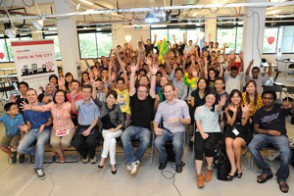
One team came up with Save Our Butts – an application to help reduce the pollution of cigarette butts by tracking overflowing ash trays and recycling the butts. Another contributed BUS-otted, a personalised bus map and bus journey planner that encourages the use of public transport. Yet another created SingCity, which allows users to build their dream living environment.
These were some of the innovative apps that emerged out of “Data in the City”, a hackathon focused on encouraging the development of innovative apps using government data from across agencies. The event, which took place from 23-25 August, was organised by the Infocomm Development Authority of Singapore (IDA) as one of the activities under the larger Apps4SG Challenge that was launched in April and closes on 1 October.
During the competition, more than 150 participants, ranging from business developers, architects, designers to app developers, were given access to previously unavailable big data sets from both government and corporate sources, such as SingTel and SMRT. The aim was to stimulate experimentation to address some core issues on urban planning and enhance life in the city.

Ms Jacqueline Poh: The government doesn’t have a monopoly on wisdom. We believe in crowdsourcing to develop useful apps that improve the way we live, work and play.
Explaining IDA’s support of the open data movement, IDA’s Managing Director Ms Jacqueline Poh said, “The government doesn’t have a monopoly on wisdom. We believe in crowdsourcing to develop useful apps that improve the way we live, work and play.”
She noted that to date, 8,700 data sets have been made available to the public through the data.gov.sg portal resulting in the creation of over 100 applications. She hopes that open data will encourage citizens to think of ways to improve their environment, health and communities. “We want to create communities of action that care about one another in all aspects of their lives,” she said.
Some of this action – such as participating in the hackathon – involves creating and “tinkering”. Ms Poh said she was “extremely excited and impressed” by the apps developed by the 18 teams in the ‘Data in the City’ hackathon, many of which applied the data to a wide range of issues.
The SingCity team got their winning idea from the computer game where players build their dream environment. Citizens can search for amenities or services near a particular location. If any of these are lacking – for example, childcare centres might have no vacancies, or there may not be enough pet -friendly cafes – users can point out the gap via SingCity. Others who have noticed the same gap can add their vote to the issue. “One of our mentors told us if he were a Member of Parliament, he’d be very interested in monitoring this every day, to know what residents from his constituency are asking for,” said team member Ms Jeannette James.
The three-person SingCity team was on a roll, having won an active-aging hackathon the week before. For their effort this time round, they bagged a 100-day bootcamp with mentors to sharpen their ideas. However, designer Mr Ridz Khalid said they will be up to it only after they have closed their sleep gap.
Another useful app to emerge out of the hackathon was BUS-otted, a personalised bus map and bus journey planner which not only has dynamic graphs to provide traffic information but also predicts traffic patterns and offers advice on alternative routes, or actions, such as waiting 20 minutes before making the journey.
Yet another winner was Connecting People with Organisations, a one-stop portal for submitting feedback to government agencies. Users can upload photos or even videos, for example, of a leaking water pipe, and the app not only filters the feedback to the appropriate agency but also allows the public to track the authorities’ response.
And to connect people with other people and with their heritage, the multi-national Point-a-View team developed a mobile app which allows users to receive images from the Singapore Memory Project as they go past various locations. From being consumers of information, they can then segue into producers by taking their own pictures, adding their story, and putting it up. “It’s conversational, personal and pictorial,” observed Mr Saurabh Anand, from India.
“Whether it’s Singapore or any other place, it’s the same – people have connections to places,” said Singaporean Mr Lim Boon Pang. Mr Jason Lim from Malaysia agreed. “We’re trying to build something that enables various generations to ‘converse’,” he said.
The fourth person on the team was Vietnamese – Mr Anthony Tran. None of the four team members knew each other before the hackathon but Mr Tran liked the ideas that were being tossed about and brought the team together.
Like the other winners, the Point-a-View team took part in the hackathon, not for the prizes but to get together to create some fresh thinking for solutions to everyday problems. “I came here to write code,” shrugged Mr Saurabh. “We got together, we made friends, we made an app in a weekend, and we won. That’s it.”